We run interaction ads on Meta for several clients out of Denmark, and our biggest bottleneck is tracking.

  • May 20, 2026
  • 3 comments
  • 22 views

Majestic10

We run interaction ads on Meta for several clients out of Denmark, and our biggest bottleneck is tracking.

We need a setup that can document:

  • Number of conversations actually started
  • Which ad drove each conversation
  • CPL at the destination level

EU/GDPR restrictions mean Meta's own reporting isn't usable for us, and we've spoken to most of the tracking providers on the market without finding one that delivers this cleanly.

On top of that, a meaningful share of the conversations we do see come from people who clicked the ad by accident and started a chat without any real intent. So even the raw conversation count is inflated, and we need a way to separate genuine leads from noise before we can trust any CPL number.

Most of the solutions we've looked at require heavy custom integrations. We're open to integration work, but want to understand what's actually realistic before committing to a build.

If you've run a similar setup at scale and cracked tracking beyond Meta's native numbers, I'd love to compare notes. Paid consulting is fine.

Who's the right person to talk to?

3 replies

Gustavo Boregio
Forum|alt.badge.img+7
  • Community Moderator & Expert
  • May 20, 2026

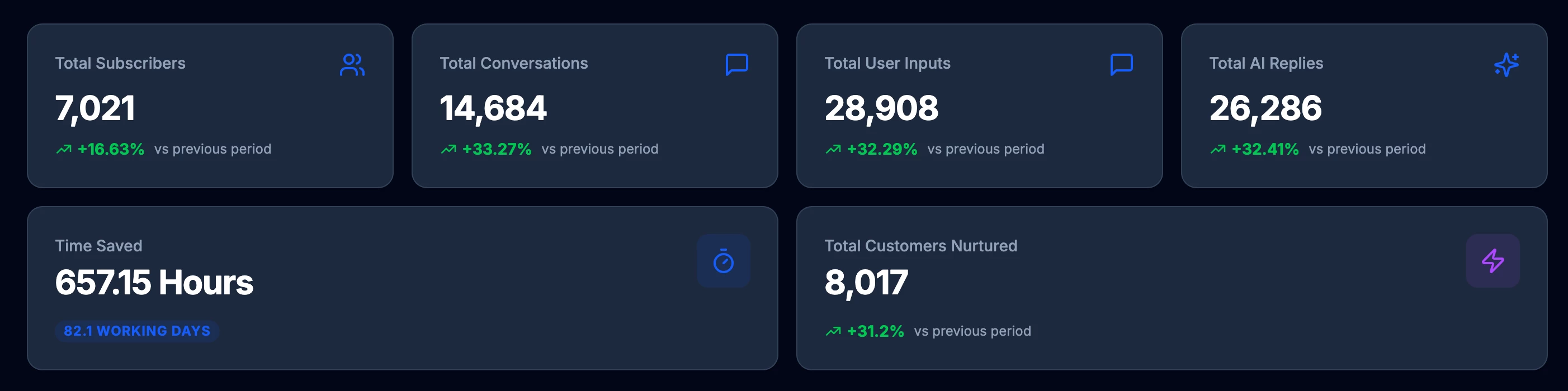
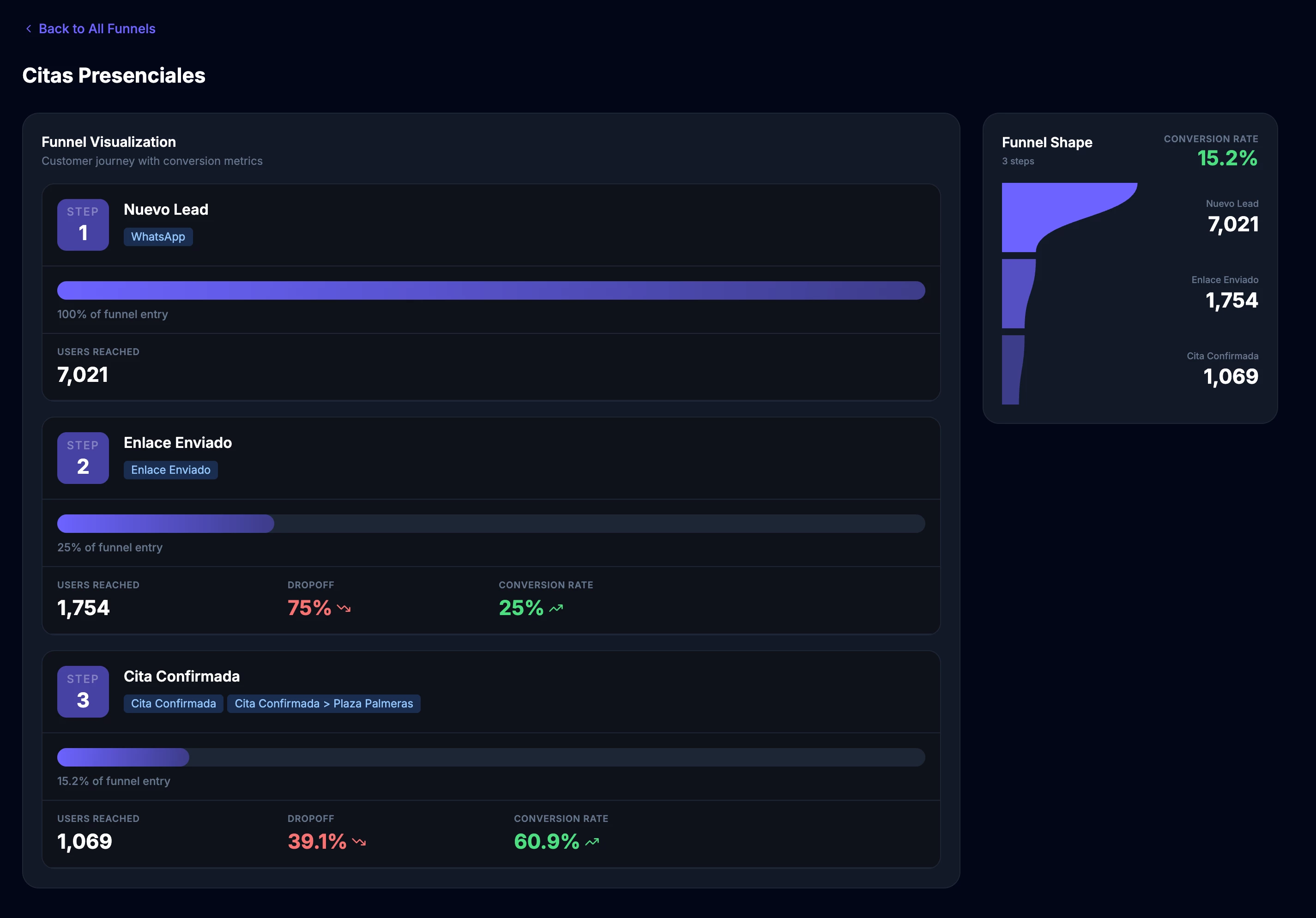
Hey ​@Majestic10 we’ve built custom solutions that allow us to have metrics for our clients such as…


And…


All connected to Manychat and pulling metrics in real time.

The UI building is an ongoing process and we’re adding more features as we speak, but so far we have a very robust reporting + database system with close to 2 million records already.


For the initial part of the funnel (Meta Ads) you still have to rely on Meta.

But once the person is inside Manychat and the client’s CRM we can take control and track anything we’d like.

So the first part is still fuzzy (Meta’s info), but once the conversation starts we have full control and metrics, individualized per user if we want to. 

But for example, for CPL, the only part we need from Meta is how much was spent! All the rest we can collect and control.

Feel free to send me a message and we can discuss further ;)


SumGenius
Forum|alt.badge.img
  • Smooth talker
  • May 20, 2026

The part most setups miss: you can attribute at the entry point, not just track everything after the conversation starts. When someone clicks a click-to-Messenger ad, Meta sends a referral object with the ad_id (always present) plus an optional ref string if you configured one. It arrives one of three ways depending on the ad:  nested in the first message, in the Get Started postback if the ad has a welcome screen, or as a standalone referral event when an existing thread is reopened. Read it off the webhook and every ad-driven conversation is tagged with the exact ad that started it.

That covers two of your three asks:

- Which ad drove each conversation: the ad_id maps it directly. Add a ref per ad if you want campaign-level grouping without extra API lookups.

- CPL at destination level: you already have conversation and lead counts, so the only thing you still need from Meta is spend. Spend divided by qualified leads from that ad gives clean CPL per ad.

For the accidental-click noise, don't filter at tracking time. Put one low-effort qualifying question at the start and only count leads who answer. Accidental clickers don't reply, so they self-filter out of your genuine-lead count.


cata_rendon
Forum|alt.badge.img+5
  • Community Moderator
  • June 16, 2026

We run interaction ads on Meta for several clients out of Denmark, and our biggest bottleneck is tracking.

We need a setup that can document:

  • Number of conversations actually started
  • Which ad drove each conversation
  • CPL at the destination level

EU/GDPR restrictions mean Meta's own reporting isn't usable for us, and we've spoken to most of the tracking providers on the market without finding one that delivers this cleanly.

On top of that, a meaningful share of the conversations we do see come from people who clicked the ad by accident and started a chat without any real intent. So even the raw conversation count is inflated, and we need a way to separate genuine leads from noise before we can trust any CPL number.

Most of the solutions we've looked at require heavy custom integrations. We're open to integration work, but want to understand what's actually realistic before committing to a build.

If you've run a similar setup at scale and cracked tracking beyond Meta's native numbers, I'd love to compare notes. Paid consulting is fine.

Who's the right person to talk to?

 

Hi ​@Majestic10  this is one of the more relevant challenges to raise here — without solid tracking it's hard to optimize or make good decisions.

I'd separate your problem into two parts, because they have very different solutions:

1. The noise (accidental clicks inflating your conversation count). This one you can solve cleanly inside ManyChat. A short qualifying flow at the top of the conversation — even one or two intent questions — lets you tag genuine leads vs. noise before anything counts. From there you can layer lead scoring (simple conditionals + ratings on key answers, or an AI step to detect purchase intent) so your numbers only reflect real conversations.

2. Attribution (which ad drove which conversation, CPL at destination) under GDPR. This is the harder one, and you're right that it's where most tools fall short. Within ManyChat you can carry the source through with tags/CUFs per entry point and export to a sheet to model CPL/CAC yourself — that gives you clean attribution as long as the volume and the EU constraints allow that setup to hold up. At real scale this is exactly where a thought-through architecture matters, vs. a patch that breaks later.

If it's useful to go deeper, at DominariAI tracking and attribution are the core of what we do — happy to compare notes, since this is precisely the layer where the optimization opportunity lives.

Cheers!

Cata Rendon